An alarm that keeps sounding
Can point to
High water in a tank, a pump or float that isn't working, or an aerator that's stopped.
What to do
Call. Silencing the buzzer doesn't fix the cause.
Repairs
When an aerobic system stops doing its job, you usually hear it, smell it or see it in the yard. Here's what tends to go wrong, what to watch for and how a repair visit goes.
Most aerobic trouble traces back to a handful of parts.
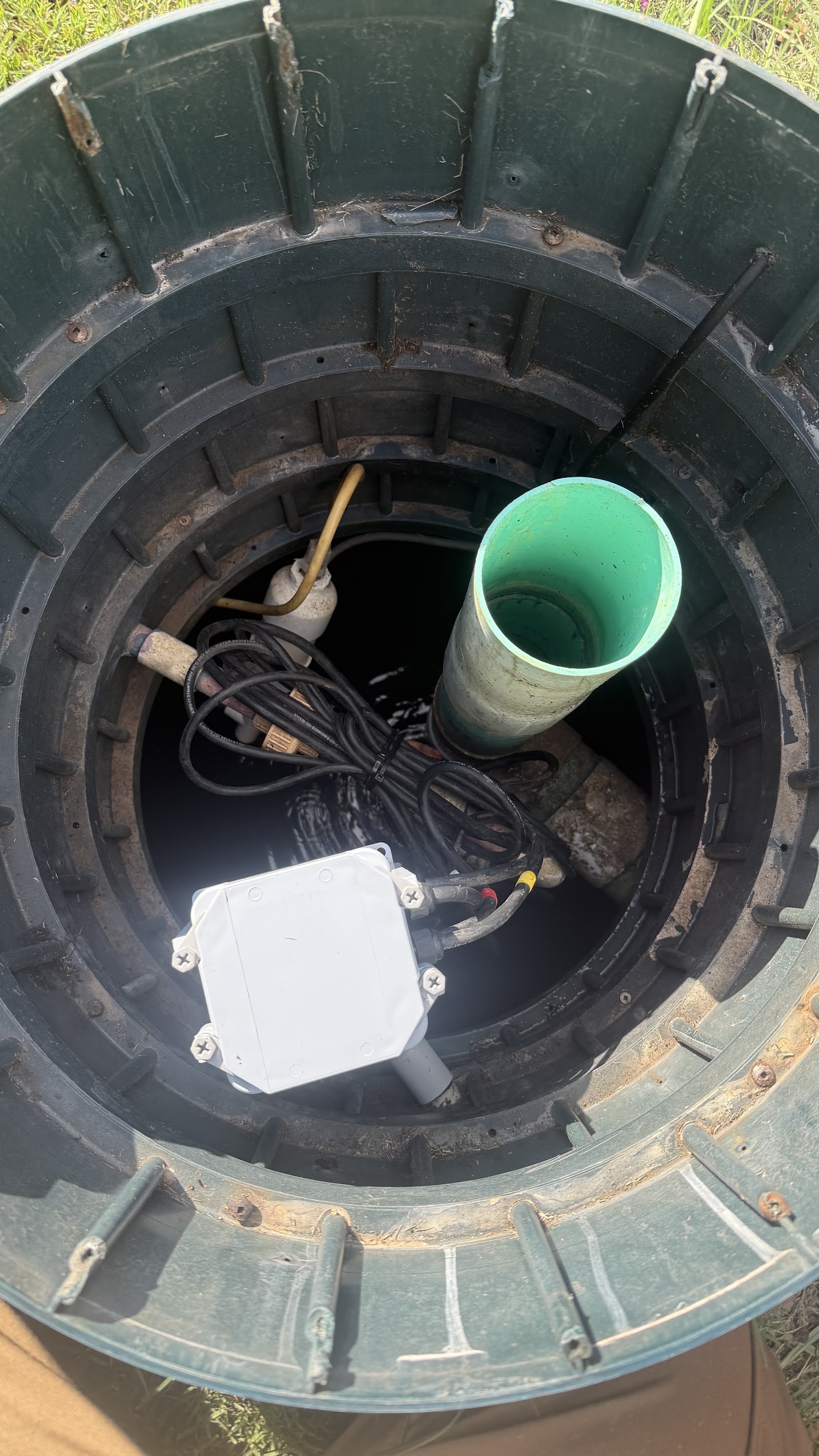
Any one of these is worth a call. Waiting rarely makes an aerobic problem cheaper.
Can point to
High water in a tank, a pump or float that isn't working, or an aerator that's stopped.
What to do
Call. Silencing the buzzer doesn't fix the cause.
Can point to
Treatment has slowed or stopped, often from a failed aerator, or the disinfection stage needs attention.
What to do
Call and describe where the smell is strongest.
Can point to
Water backing up in the tanks, sometimes from a pump that isn't sending water out.
What to do
Go easy on water use and call.
Can point to
A broken line, a damaged spray head, a leaking drip line or a pump running too long.
What to do
Keep kids and pets away from the area and call.
Can point to
A tripped breaker, a failed motor or a problem in the control panel.
What to do
Check the breaker once. If it trips again, call.
Repairs follow the same order every time, so you know what's going on with your system before anything gets replaced.
The system gets checked from the panel to the dispersal area to find what's actually failed, not just what's beeping.
You're told what the fault is, what caused it and what it takes to fix.
The failed part is repaired or replaced, whether that's the aerator, the pump, a float, the panel or a run of spray heads.
The system is run and checked so you know it's treating and dispersing water again before the job is called done.
In Texas, a permit is needed to build, alter, repair or extend a septic system. Replacing a tank counts as a repair and needs a permit for the whole system, from your local permitting authority.
Some emergency repairs can be made before a permit: tank lids, inlet and outlet devices, risers and caps, disinfection devices, drip tubing and solid lines. They must be reported to the permitting authority in writing within 72 hours of starting the work (TCEQ, 30 TAC §285.35).
If you've had a notice about a malfunctioning system, your permitting authority sets the deadline to fix it, which can be 30, 20 or 10 days depending on earlier notices. Don't sit on it.
This is general information, not legal advice. A county's septic order can be stricter than the state rules, so confirm what applies to your property with your permitting authority. Our FAQ page explains who issues septic permits around Bryan, TX.
Tell us what you're seeing, hearing or smelling, and we'll take it from there.