New installs
New Septic Installs in Bryan, TX
Building on a rural lot, or replacing a system that's done for? Here's what goes into a new aerobic system and how an install moves from an empty yard to a working system.
What a new aerobic system includes
An aerobic system is a chain of stages. Wastewater moves through each one in order, coming out the far end clean enough to spray on a lawn or drip under it.
-
1
Trash or pretreatment tank
Catches solids and anything that shouldn't go further, so the rest of the system isn't fouled.
-
2
Aeration chamber
An aerator pushes air in, and oxygen-loving bacteria break the waste down.
-
3
Clarifier
Lets remaining solids settle out so clearer water moves on.
-
4
Disinfection
Treats the water before it leaves, usually with a tablet chlorinator on spray systems.
-
5
Pump tank
Holds treated water until the pump sends it out to the yard.
-
6
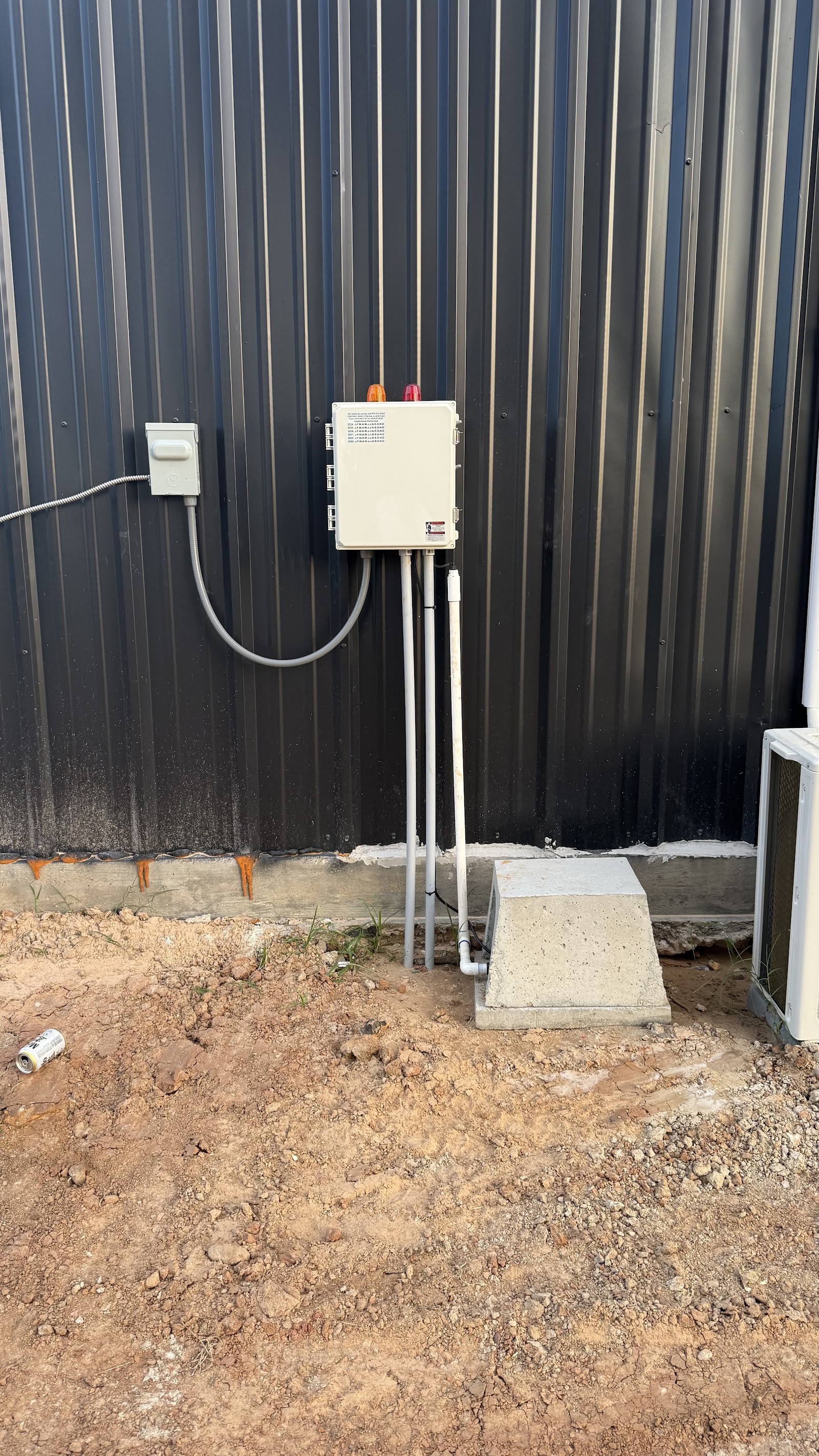
Control panel and alarm
Runs the aerator and pump, and warns you when something isn't right.
-
7
Spray or drip dispersal field
Spray heads water the surface, or drip lines release water just under it.
How an install comes together
Every lot is different, but the order of things stays the same.
-
1
Site evaluation
The soil, the slope, the size of the lot and where the house, well and property lines sit all shape what will work.
-
2
System design
The system is sized to the home and laid out on the lot, including whether spray or drip dispersal fits best.
-
3
Permitting
A permit is needed to build a septic system, and it comes from the local permitting authority. Construction waits for the permit.
-
4
Installation
Excavation, setting the tanks, running the lines, wiring the control panel and putting in the dispersal field.
-
5
Inspection
Inspections come from the same local permitting authority that issued the permit.
-
6
Startup
The system is powered up and run, and the two-year service policy clock starts when it's first used.
Permits for a new or replacement system
Who issues septic permits in Bryan, TX?
Septic systems in Texas are regulated by TCEQ under 30 TAC Chapter 285, but permits and inspections come from the local authorized agent. That's usually the county, sometimes a city, river authority or health district. Where there's no authorized agent, the TCEQ regional office is the permitting authority. TCEQ's county lookup shows who it is for your address.
Do I need a permit to replace my septic tank?
Yes. In Texas, replacing a tank counts as a repair, and it needs a permit for the whole system from your local permitting authority. A county's own septic order can be stricter than the state rules, and when it is, the county order prevails.
This is general information, not legal advice. Confirm the specifics for your property with your permitting authority, and see the FAQ page for more.
After installation
A new aerobic system isn't a set-it-and-forget-it job. In Texas, it comes with an initial two-year service policy, starting when the system is first used (for a new home, the builder's sale date).
Once those two years are up, the owner of a single-family home either maintains the system personally or signs a new maintenance contract. Commercial, speculative-residential and multifamily owners may not maintain their own, and a county may require a contract or training. A maintenance contract keeps regular inspections going without you having to track them.
One more rule from TCEQ: don't build over or drive over any part of the septic system. That includes the tanks and the dispersal field.
Have this ready before you call about an install
- Where the property is
- The town and county, so the right permitting authority is clear from the start.
- A plat or survey of the lot
- Lot size and boundaries, plus any well, pond or easement.
- House plans or the home's size
- Number of bedrooms and square footage drive how the system is sized.
- New build or replacement
- If you're replacing a system, what's there now and what it's doing.
- Your timeline
- When the house will be ready or when you need the system working.
Planning a new aerobic system?
Call and talk it through with a Bryan, TX septic service that installs them.